I built this guide with AI for this conversation. We will use it as we go, then you can explore it at your own pace. Peeku and FuelSaathi are the real examples; your own problem is where we will finish.
First, a show of hands
Have you used AI to write something? Have you asked it to make something you could use?
02 / Peeku
Start with a problem you can see.
A need close enough to notice is easier to build for and easier to test.
I wanted my Mac to respond when I left my desk and to nudge me to move. An early version was a starting point. The ongoing work is making its behaviour useful in daily life.
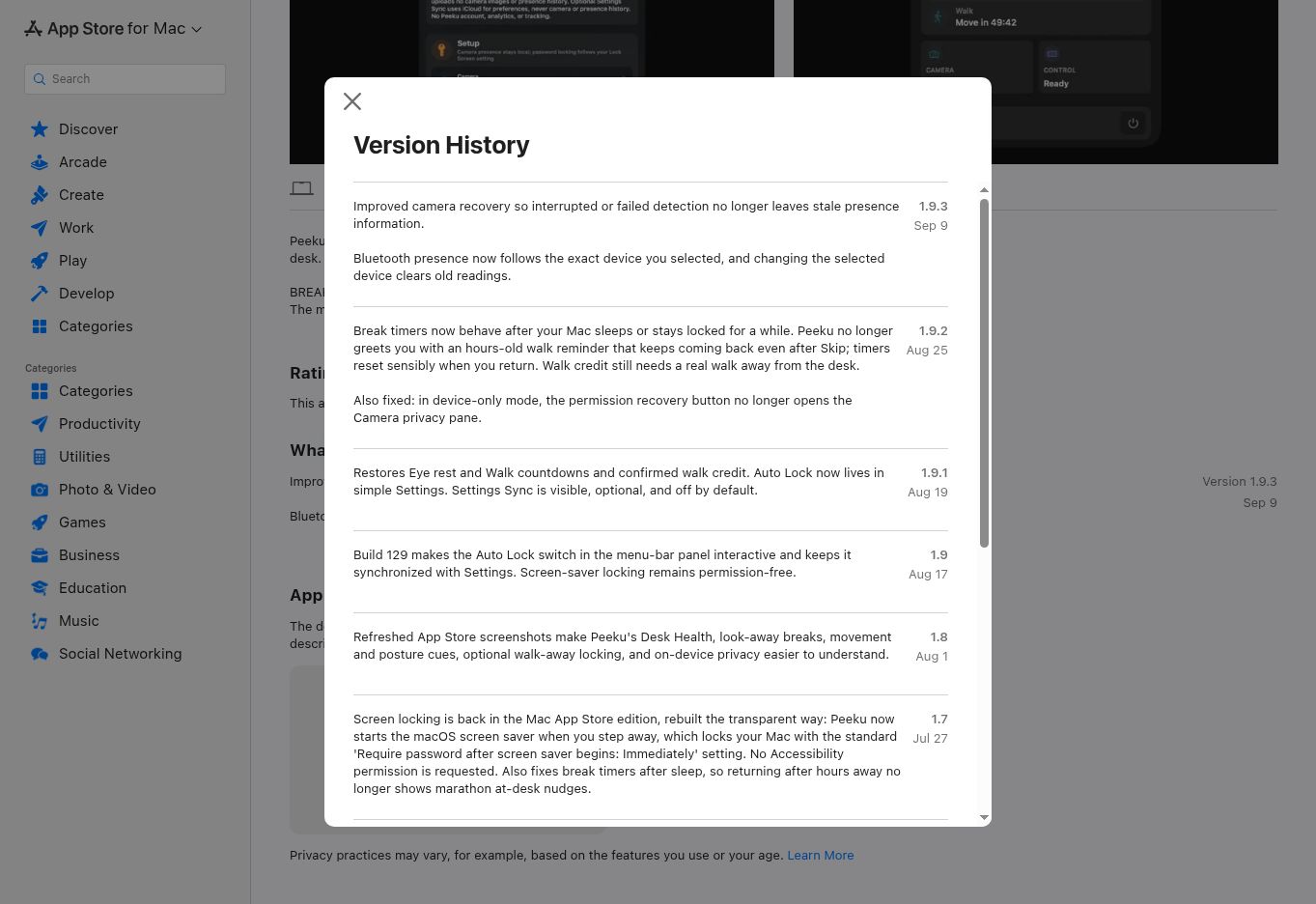
Peeku’s published version history describes a camera recovery fix and more precise handling of a selected Bluetooth device. That release note shows one part of the work after launch.
My background is in explaining complex things to other people. Building software changed the tools, but I kept asking who needs it, what is true, and how we will know it works.
What people seeA working screen
Reveal the work behind it
The need
Relevant context
A first version
A deliberate test
A useful revision
A first working version begins the story. Maintenance gives it a life beyond the demonstration.
04 / How AI uses information
Training, context, and saved records.
These answer different questions about what an AI system can use.
Before your question
Training shapes the model.
Learning from many examples changes the model itself. Your question in a conversation does not retrain it.
Think of someone practising before a new job.
EXAMPLES → PRACTICE → MODEL
Attention: when a model produces a piece of text, it can weigh which parts of the available context are useful for that step. It does not guarantee that it will notice the right fact.
Why language models became useful
Documents, conversations, instructions, and code carry a great deal of what people have learned. A language model can work with patterns across them. Language is a useful doorway to knowledge; intelligence also includes perception, action, and experience beyond words.
What “next token” means
A typical language model generates text in pieces called tokens. It uses what came before to estimate a next piece, then repeats. Training and later instruction tuning shape that behaviour. A convincing passage can still contain a wrong claim.
Is every new model like this?
No. For example, TypeSafe describes Jev as a System One model that answers defined questions with typed probabilistic decisions from unstructured state. The declared answer type constrains the format; the choice can still be wrong. Read its explanation ↗
05 / FuelSaathi
An answer with its source.
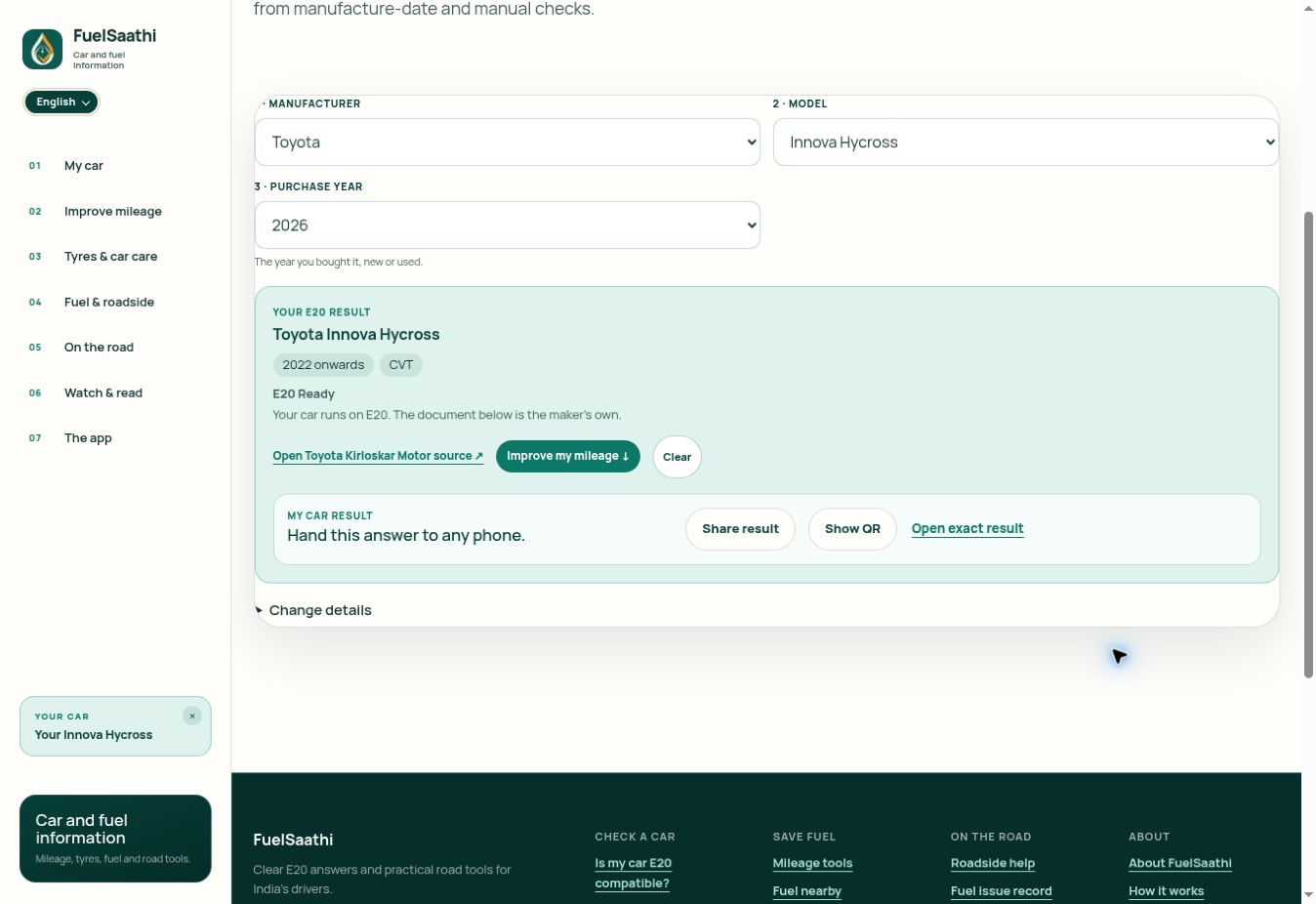
FuelSaathi starts with practical questions about vehicles and fuel. A source alongside a result helps the reader inspect the answer.
FuelSaathi is an independent project. Public product pages show the products; they do not prove every current behaviour.
06 / Give it a brief
Give the work something to go on.
The same small announcement can sound vague or specific. This constructed example uses an invented event.
Without a brief
“Write an announcement about our workshop.”
We are thrilled to announce an exciting workshop that will empower participants with transformative insights.
With a brief
“Announce a 45-minute session for new volunteers. We will practise checking claims against source documents. Keep it plain. Do not invent speakers or results.”
New volunteers can join a 45-minute session on checking claims against source documents. We will practise with a short example together.
07 / My Second Brain
A workroom for the model.
This simplified view of my Second Brain shows the parts I use to stop repeating background and losing decisions. Select one to see its job.
01 / Instructions
How I want the work done.
An instruction can say who the reader is, how carefully to treat evidence, and which voice belongs to the task.
“Use these facts, and tell me what you cannot verify.”
What a connection can reach
A connector can offer selected information or tools. Its permissions still decide what can happen. A saved record helps only when it is brought into the current task.
Different ways to work with AI
Discuss a question A chat helps explore, explain, and draft.
Delegate a work product A defined workspace can gather material, make files, and check them.
Work in a code project A coding agent can change source files and run relevant tests.
The names and capabilities overlap. Ask what the application can access, what it can do, and how you will review the result.
08 / Your turn
Make a brief for one problem.
Start small enough to judge the result. Your entries stay in this browser unless you copy or download them.
After the talk
Keep exploring.
Return to a chapter, take your brief into a real task, or follow one of these writers.
 Public Peeku site, 23 Sep 2026 · View full size ↗